
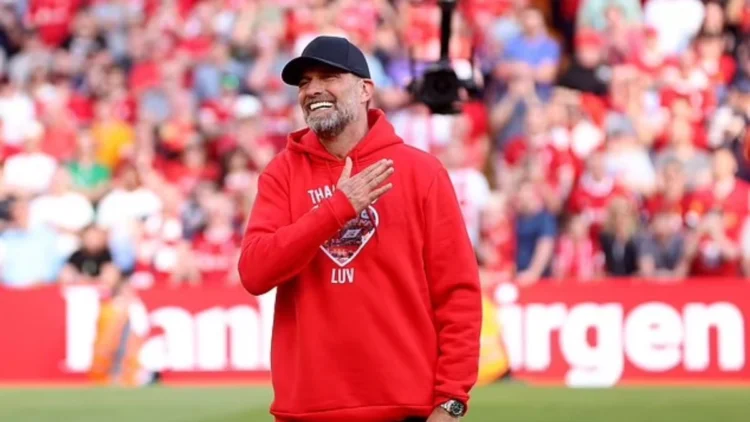
After bringing an unforgettable era to a close at Liverpool FC, Jürgen Klopp made it clear that his next chapter would prioritize personal balance over professional ambition.
Despite interest from two Premier League heavyweights — Chelsea FC and Manchester United — the German manager chose not to return to the English touchline.
His decision reflects both loyalty to Liverpool and a commitment to stepping away from the relentless demands of elite football management.
Speculation Followed Klopp’s 2024 Liverpool Departure
When Klopp officially stepped down from Liverpool in 2024, European football immediately buzzed with questions about his future. Having transformed the club into one of the most formidable forces in world football, it was no surprise that top-tier clubs quickly assessed his availability.
According to his agent, Marc Kosicke, both Chelsea and Manchester United reached out following his exit from Anfield. However, Klopp had already made up his mind. He would not manage another English club after Liverpool.
This stance highlights the emotional connection he developed during his time at Anfield — a bond he did not wish to dilute by coaching a domestic rival.
Loyalty and Principles Above Opportunity
Klopp’s refusal was not driven by a lack of ambition. Instead, it stemmed from deeply rooted principles. Throughout his career, he has emphasized authenticity and loyalty, values that guided his decision.
Coaching a direct competitor to Liverpool would have conflicted with the legacy he built. By turning down both clubs, Klopp protected his relationship with supporters and preserved the symbolic weight of his tenure.
In modern football — where managerial moves between rivals are common — this decision stood out as rare and deliberate.
The Weight of a Golden Era at Liverpool
Klopp’s time at Liverpool was nothing short of transformational. His tenure defined one of the most successful modern chapters in the club’s history.
Major Honors Under Klopp
- UEFA Champions League (2019)
- Premier League Title (2019–20) — ending a 30-year league drought
- FA Cup
- League Cup
- FIFA Club World Cup
The 2019–20 Premier League triumph was particularly historic, as it concluded three decades of waiting for a domestic league championship. Beyond trophies, Klopp restored Liverpool’s global stature and competitive identity.
Why Klopp Stepped Away
Klopp openly acknowledged that the emotional and physical demands of leading such an intense project had taken their toll. Nearly a decade of high-stakes competition, constant media scrutiny, and the pressure to sustain excellence left him feeling depleted.
He explained that the energy required to continue at the highest level had run out. Rather than risk diminishing standards, he chose to close the chapter on his own terms.
His departure was not about decline — it was about timing.
Life After the Dugout: Red Bull Leadership Role
Although Klopp stepped back from daily management, he did not leave football entirely. He now serves as Head of Global Soccer within the Red Bull football network.
This strategic position allows him to shape sporting development across multiple clubs without the day-to-day intensity of coaching. The role provides influence, flexibility, and a healthier work-life balance.
Before accepting the Red Bull position, Klopp was also linked with potential national team roles, including the United States and Germany. However, none of those discussions materialized into formal appointments.
An Open Future at 58
At 58, Klopp has not completely shut the door on a managerial return. While he is currently enjoying life away from the technical area, his name consistently surfaces whenever elite clubs or national teams face vacancies.
His reputation remains intact — arguably stronger than ever — due to both his achievements and the manner of his exit.
For now, though, Klopp appears content influencing the game from a broader perspective rather than the side line.
Conclusion
Jürgen Klopp’s decision to reject Chelsea and Manchester United after leaving Liverpool was not merely a career choice — it was a statement of loyalty and self-awareness. After guiding Liverpool through one of its most successful periods, he prioritized personal well-being and legacy preservation over high-profile opportunities.
His move into a strategic Red Bull role signals a new phase rather than a farewell. While the possibility of a managerial comeback remains open, Klopp’s commitment to his principles continues to define his career as much as the trophies he lifted.
FAQs
Why did Jürgen Klopp reject Chelsea and Manchester United?
Klopp had already decided not to coach another English club after Liverpool, aiming to protect his legacy and emotional connection with the club.
What trophies did Klopp win at Liverpool?
He won the Champions League (2019), Premier League (2019–20), FA Cup, League Cup, and FIFA Club World Cup.
Is Klopp planning to return to management?
He has not ruled out a future return but is currently focused on his strategic leadership role within Red Bull’s football structure.